Can you tell me about your journey into the securities finance industry?
My journey into securities finance started at the operational level in 2021, working in collateral management out of our Montreal office. I like to think of it as learning the business from the ground up. While it may not have been the most direct path to the trading floor, it gave me a strong foundation and helped me to understand the mechanics of the business beyond just the trade itself.
In 2022, I moved into settlement operations, supporting the New York office from Montreal. The following year, I was offered the opportunity to relocate to New York while continuing in the same role, and I decided to take it. Being physically closer to the trading desk gave me a much better understanding of the traders' day-to-day responsibilities and the front-end side of the business.
In 2024 and 2025, I began working more closely with the traders on buy-ins, taking on responsibilities that were closer to a middle office function. That experience gave me additional exposure to trading decisions, market dynamics, and the importance of communication between the front and back offices.
In October 2025, I made the move to the front office as a securities lending trader. Looking back, each step helped prepare me for the next. My path may have been less traditional than some, but I believe having worked across different areas of the business gives me a broader perspective today. I understand not only what happens when a trade is executed, but also everything that needs to happen behind the scenes to make it successful.
As a young professional, what aspects of your role or the industry do you find most exciting?
What excites me most about securities finance is that it is a specialised industry with a lot of depth and room to grow. It plays an important role in market liquidity and the efficient functioning of financial markets, yet it remains relatively unknown to people outside of the industry. There is still so much to learn, whether it is understanding the economics behind different securities, identifying new market opportunities, or adapting to changes in technology and regulation.
The market's recent growth is another reason I find the industry exciting. According to S&P Global Market Intelligence, global securities finance revenues reached approximately US$14.9 billion in 2025, an increase of 27 per cent from the previous year. To me, that highlights the scale of the business and the opportunities available to those willing to develop a deep understanding of it.
I am also interested in how artificial intelligence and new technologies could shape our industry. I believe there is an opportunity for younger professionals to bring a fresh perspective by using these tools to improve data analysis, identify patterns, and make workflows more efficient.
On a more personal level, one of the most rewarding aspects of my role is the opportunity to interact directly with different banks and clients, including meeting them in person. As technology continues to change the way we work, I think the human side of the business becomes even more valuable. Building relationships, understanding a counterparty's needs, and being able to coordinate future activities are still important parts of what makes this business work.
Finally, I feel fortunate to have earned the trust of my managers and colleagues early in my career. I have been given the opportunity to gain exposure to different products, including exchange traded funds (ETFs), corporate bonds, and hard-to-borrow securities. Working across these areas allows me to better understand their individual dynamics and discover where my strengths and interests lie. I see that variety as a valuable part of my development as a trader.
Many companies offer various training and development opportunities for their employees. How has your company supported your growth?
I have learnt that securities lending is not necessarily something you can fully understand in a classroom. Technical knowledge is important, but much of the learning comes from being hands-on, seeing how the market operates in real time, and understanding how decisions affect the different parts of the business.
One of the most important opportunities my company gave me was the chance to relocate from Montreal to New York while remaining in my operations role. Being physically closer to the trading desk allowed me to see the business from a different perspective. I could observe how traders assessed opportunities, managed relationships, and responded to changing market conditions, rather than seeing only the operational side of each transaction.
Over time, I was given additional responsibilities that brought me closer to the middle office and the front office. Those opportunities gradually expanded my knowledge and ultimately helped me discover that trading was something I wanted to pursue as a long-term career. Without that exposure, I am not sure I would have identified that path as early as I did.
My company has also supported my development by allowing me to attend industry events where I could meet traders and operations professionals from other firms, including people I had previously dealt with through day-to-day operations. Those interactions helped me to build my network, exchange ideas, and gain a broader understanding of the industry.
Overall, I would say that the most valuable support has been the combination of trust, exposure, and responsibility. Being given the opportunity to learn by doing, take on new challenges, and work alongside experienced professionals has played a major role in my progression.
What misconceptions about working in the financial industry have you encountered, and how do you address these challenges?
One misconception I have encountered is that success in finance requires being extremely aggressive or constantly trying to outperform everyone around you. In reality, I believe there is no single personality type or approach that guarantees success. Even within the same company, you can find successful professionals with very different styles. What matters is understanding your strengths, being consistent, and knowing how to adapt to the situation.
Another misconception is that every transaction needs to produce a winner and a loser. In securities lending, I see it differently. The strongest relationships are often built around finding mutually beneficial opportunities. Both sides need to understand what the other is trying to achieve and find a way to create value while managing their own risks and obligations.
That also means understanding the regulatory and operational frameworks in which we operate. In the US, for example, rules such as SEC Rule 15c3-3, which addresses the protection of customer funds and securities, form part of the broader regulatory environment that broker-dealers must navigate.
Understanding the applicable requirements in both the US and Canada helps us assess opportunities appropriately, structure transactions within the relevant constraints, and provide solutions that work for our counterparties as well as our own firm.
Ultimately, I believe long-term success in this industry comes from combining commercial awareness with technical knowledge, sound judgment, and strong relationships. You can be competitive without treating every interaction as a zero-sum game. In my experience, being someone others trust and want to do business with is just as important as being able to identify a good trading opportunity.
What advice do you have for other young professionals aspiring to pursue a career in
your industry?
My first piece of advice would be not to be discouraged if your path to the front office is not immediate. Some of my friends moved directly into front office roles after graduating, while my journey started in operations. Instead of seeing that as a disadvantage, I focused on learning as much as I could, working hard, and making the most of the opportunities that came my way.
Having an operational background has been valuable to me. It helped me understand settlement processes, collateral management, and the importance of getting the details right. It also allowed me to build relationships across different teams and develop a broader view of how the business works. Those are skills I continue to rely on as a trader today.
A mentor once told me: “Be small enough long enough, and you'll be big enough soon enough.” That advice has stayed with me because it reminds me that there is value in being patient, staying humble, and taking the time to build a solid foundation. You do not need to rush every step of your career; you need to make sure you are learning something valuable along the way.
My second piece of advice would be to take the initiative and reach out to people. Do not be afraid to knock on someone's door, ask questions or seek guidance from someone whose career you admire. You may be surprised by how willing experienced professionals are to share their knowledge and help the next generation. Many of them benefited from mentorship themselves and are happy to give back.
You still have to put in the work and earn people's trust, but you do not have to figure everything out on your own. Stay curious, build relationships, be reliable, and make yourself available when opportunities arise. Sometimes, one conversation or one opportunity can change the direction of your career.
Looking ahead, where do you see yourself in the next five years in terms of your career goals and aspirations?
Over the next five years, my main goal is to develop deeper expertise in a particular product or area of the securities lending market. At this stage of my career, I am fortunate to have exposure to a variety of products, including ETFs, equities, corporate bonds, and hard-to-borrow securities. That breadth is valuable because it allows me to understand the different drivers of demand, pricing, and risk across the market.
As I gain more experience, I would like to identify where I can add the most value and build a strong specialisation. I want to develop the market knowledge, technical skills, and client relationships necessary to become someone people can rely on for insight and execution in that area.
At the same time, I want to maintain a broad understanding of the industry and continue learning from colleagues, clients, and counterparties. I do not see specialisation as a reason to stop exploring other areas of the business; rather, I see it as an opportunity to build deeper expertise on top of the foundation I have developed so far.
Ultimately, I want to become a well-rounded trader who combines strong product knowledge with sound judgment, a long-term approach to relationships, and the ability to adapt as the industry evolves. I am still early in my journey, and I see the next five years as an opportunity to keep learning, take on greater responsibility, and establish myself as a trusted professional in securities finance.
Next emerging talent →
Clearstream
Embracing the deep end


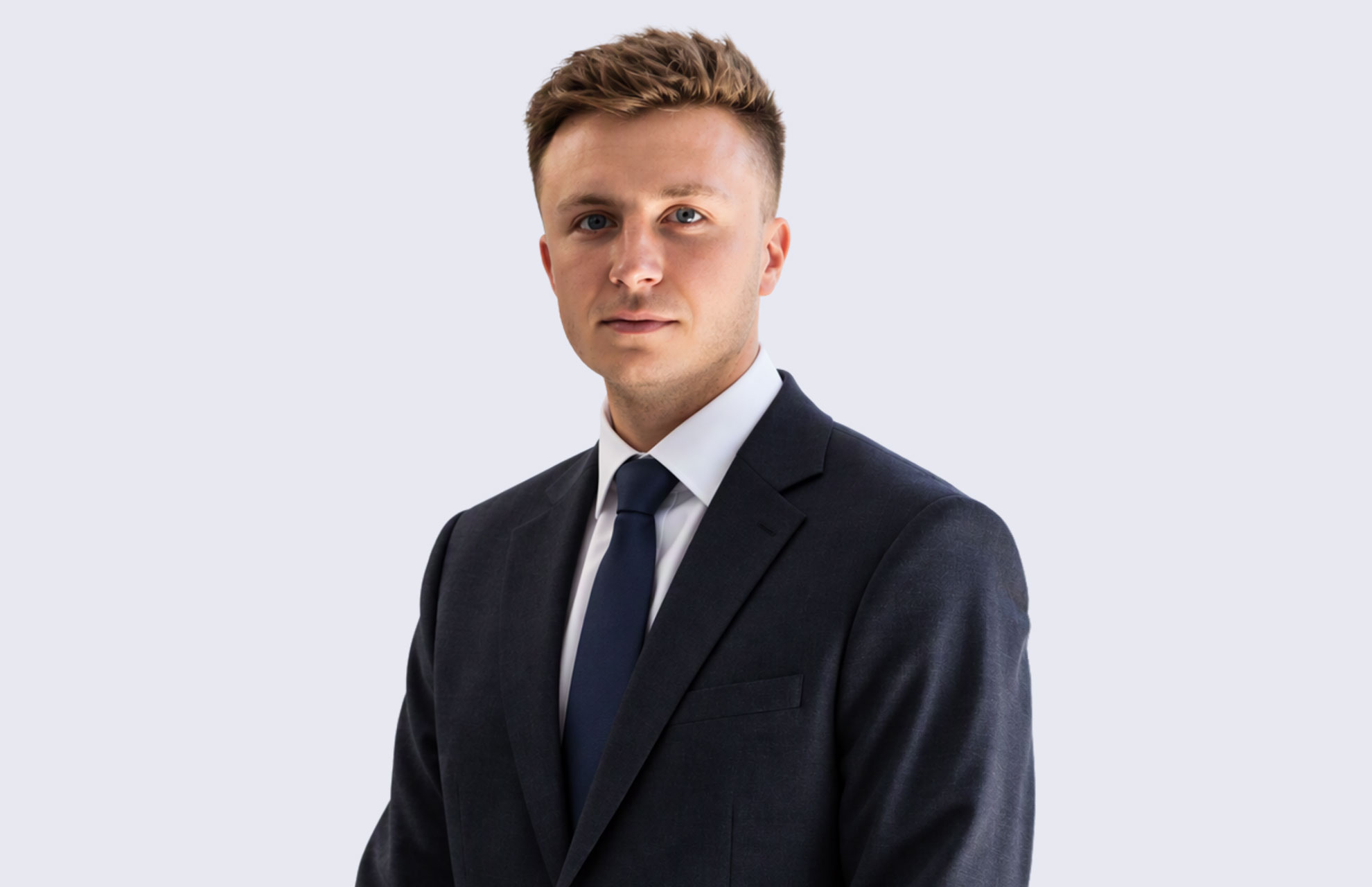 Image: Jean-François Dionne