Talk us through some of the changes you are seeing in the industry and how you are reacting to these opportunities?
Joseph Gillingwater: Certainly, and we do see the changes as opportunities with the securities finance market entering an exciting new phase. For US participants, the dominant theme remains the transformation of US Treasury repo with mandatory clearing on the horizon. Meanwhile, developments in securities lending suggest that the market is becoming increasingly global, more fragmented, and more sensitive to balance sheet capacity.
Consequently, we continue to observe activity evolving beyond its traditional role as an incremental revenue strategy. Modern securities finance brings together securities lending and borrowing, synthetic lending through total return swaps (TRS), repo, collateral optimisation, financing, and inventory management to support the liquidity needs of the total portfolio, while also creating a potential standalone source of alpha.
Jonathan Lacey: The evolution of these capabilities is becoming increasingly important to our institutional investor client base. Whether it is pension reforms, regulatory pressures, changing asset allocation strategies, or growing private markets activities, they have all introduced additional complexity into portfolio management. Consequently, balancing liquidity needs while maintaining efficient use of available inventory has become a key strategic consideration.
As such, the focus is shifting from participation to optimisation. Decisions across the portfolio cannot be managed as a series of separate activities with inventory fragmented. To extract the greatest value, securities finance, collateral management, repo financing, custody, and margin requirements need to be managed holistically. Therefore, the future of securities finance will increasingly be defined by an investor's ability to connect these activities within a single, integrated framework that maximises both operational efficiency and portfolio outcomes.
There continues to be significant regulatory change. Can you share how you are reacting, and what you see as both positives and negatives from rule changes?
Lacey: The biggest regulatory catalysts right now are the Securities and Exchange Commission’s (SEC's) mandatory clearing rules for US Treasury repo activity, the SEC’s Rule 10c-1a, which mandates reporting of securities lending transactions, the transition to T+1 settlement in major global markets, and the broader impacts of Basel III Endgame capital requirements.
Market participants are investing heavily in technology, alongside efforts to materially restructure collateral strategies to shift to more capital efficient models. While these may come with higher compliance costs and elevated barriers to entry, they will result in increased transparency, operational modernisation, and overall broader adoption of central counterparty usage.
Gillingwater: The scale of US Treasury repo is difficult to ignore. According to the Federal Reserve Bank of New York, overnight Treasury repo volumes underpinning SOFR have grown from roughly US$1 trillion in early 2022 to around US$3 trillion today. At the same time, hedge funds have become an increasingly important source of marginal demand for Treasuries, particularly through cash-futures basis and swap-spread strategies, which result in leveraged funds physically purchasing the bonds. That makes the transition to central clearing more than a regulatory exercise.
The SEC’s Treasury clearing requirements are accelerating a structural migration of repo activity towards centrally cleared models, with Treasury cash transactions moving first and eligible repo and reverse-repo transactions following by June 2027. The Fixed Income Clearing Corporation’s (FICC) sponsored service is consequently becoming increasingly important as banks and dealers provide hedge funds, money market funds, and other clients with access to cleared financing.
In addition, the US adoption of the latest Basel III capital framework will represent a landmark development for market participants. While repo-style transactions are expected to benefit from recalibrated capital requirements, broader expectations are that banks' overall capital obligations will increase as regulators seek to ensure institutions maintain sufficient loss-absorbing buffers.
Are you finding that clients recognise the evolution, or encountering any push back or obstacles?
Lacey: Regulatory developments and evolving investment strategies across our client base are placing increased emphasis on liquidity, collateral, and inventory optimisation. As asset owners and investment managers gain greater flexibility in how capital is deployed, the ability to access and mobilise assets efficiently has become increasingly important. At the same time, growing liquidity demands and the expanded use of derivatives are increasing the need for high-quality collateral and effective balance sheet management.
In this environment, the efficient movement and utilisation of assets is no longer purely an operational consideration, but a critical enabler of investment performance and risk management. As a result, collateral and inventory optimisation capabilities are becoming an increasingly important source of strategic value.
Gillingwater: Despite the growing strategic importance of better asset mobilisation, collateral optimisation, and alpha generation, implementation remains a significant undertaking. Firms have to navigate considerable infrastructure investment, capital commitments, and evolving risk management requirements. These challenges can slow the pace of adoption and increase execution risk. Consequently, clients are increasingly relying on their agents to provide the infrastructure, connectivity, and market expertise required to deliver these capabilities efficiently and at scale.
You both have global remits, and I can imagine many plates to spin at once. How do you measure success?
Gillingwater: Ultimately, via the use of data-backed metrics to ensure we optimise client performance and binding constraints while remaining aligned with Northern Trust’s core values. Looking at revenues with a global lens, securities lending is displaying a strikingly different regional dynamic. According to S&P Global data, global lending revenues reached a record US$8.8 billion in the first half of 2026, up 33 per cent year-on-year (YoY).
Asian equities have emerged as the standout growth engine, with demand particularly strong in Taiwan, South Korea, Hong Kong, and Japan, while government bond lending has also remained resilient. The divergence has continued into the summer. August securities lending revenue in Asia Pacific rose 106 per cent YoY to US$659 million, while Americas equity revenue fell 39 per cent despite a 48 per cent increase in balances. The contrast illustrates an important point: higher balances do not necessarily translate into higher returns when securities become plentiful and lending fees compress.
Lacey: For US market participants, the lesson is increasingly international. Treasury clearing, hedge-fund leverage, and dealer balance sheet constraints will remain central to repo, but opportunities in securities finance are increasingly being generated by Asian markets, corporate actions, new listings, and concentrated demand for scarce securities.
The next phase of the market will be less about simply finding additional volume and more about efficiently allocating balance sheet, collateral, and clearing capacity across an increasingly interconnected global market.
To summarise, what are you most excited about if you think about how your organisation will change over the next five years?
Lacey: The evolution of securities finance aligns with the broader transformation underway across the client landscape. Clients are increasingly focused on achieving portfolio-level visibility across inventory, enabling a more integrated and optimised operating model. By breaking down traditional silos, organisations can better mobilise assets, optimise collateral and liquidity, and strengthen governance through a central oversight framework.
Northern Trust stands ready to support asset owners as they continue to evolve their approach to liquidity, collateral, and inventory management. Through our experience across custody, securities finance, and data services, we help institutions build greater transparency, strengthen governance, and develop a more holistic view of liquidity across the total portfolio.
Gillingwater: I am excited about how we have developed Northern Trust’s Securities Finance Solutions to enable investors to move beyond siloed approaches to liquidity, collateral, and financing management. By combining financing capabilities, inventory optimisation, collateral management, data analytics, and API connectivity within a single framework, clients can now gain a holistic view of their assets and deploy capital more efficiently across the total portfolio.
At the core of the ecosystem is Northern Trust’s near real-time proprietary inventory management platform, which serves as the central inventory and data layer, providing visibility and control over available assets and enabling more informed, data-driven decisions across liquidity, collateral, and financing activities. There is certainly plenty to look forward to!


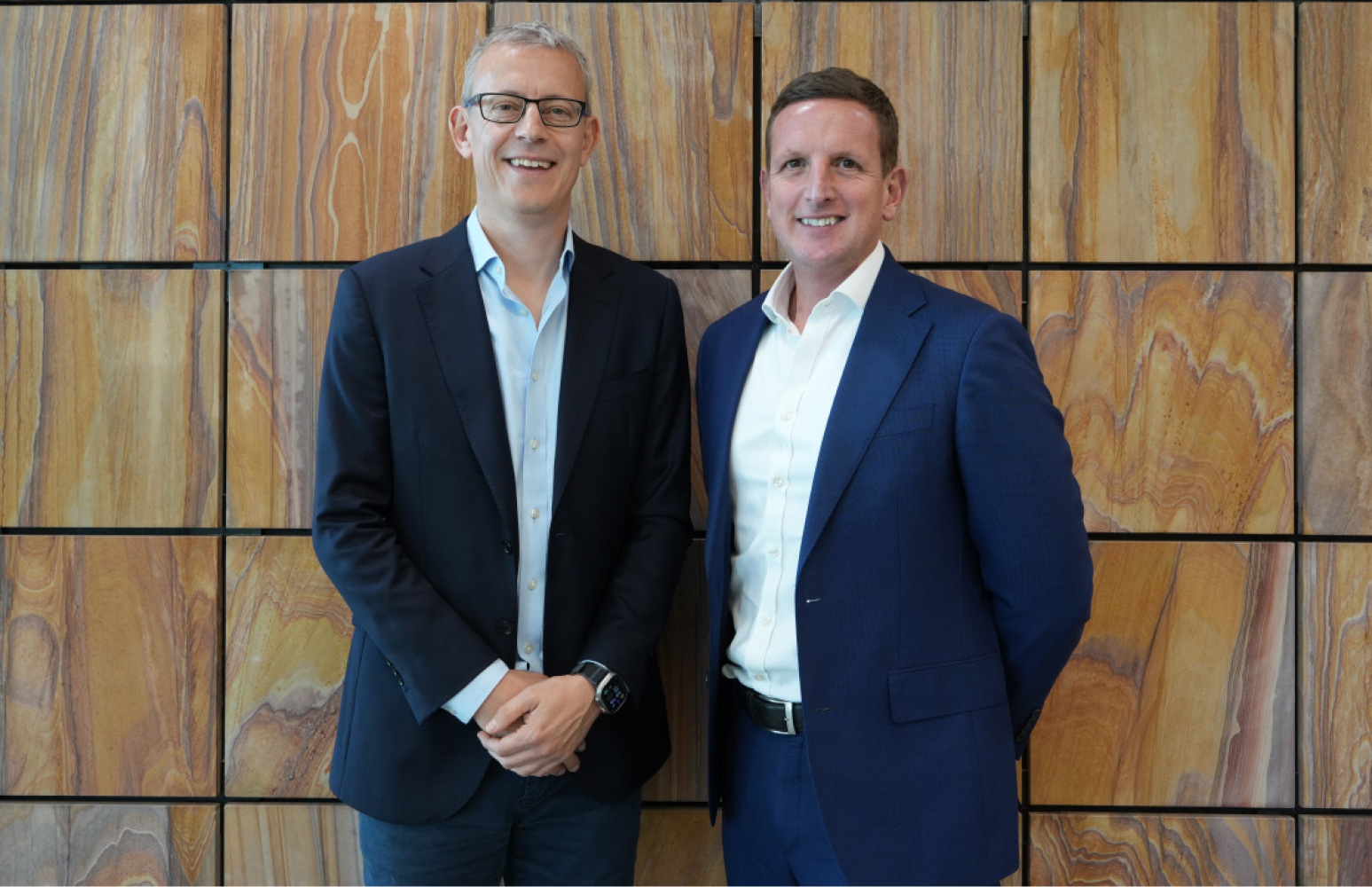 Image: Northern Trust