Exploring an evolving market
13 October 2026
London’s Securities Finance Symposium played host to intriguing market conversations and debate. Touching on T+1 readiness, beneficial owner insights, as well as tokenised securities and the collateral frontier
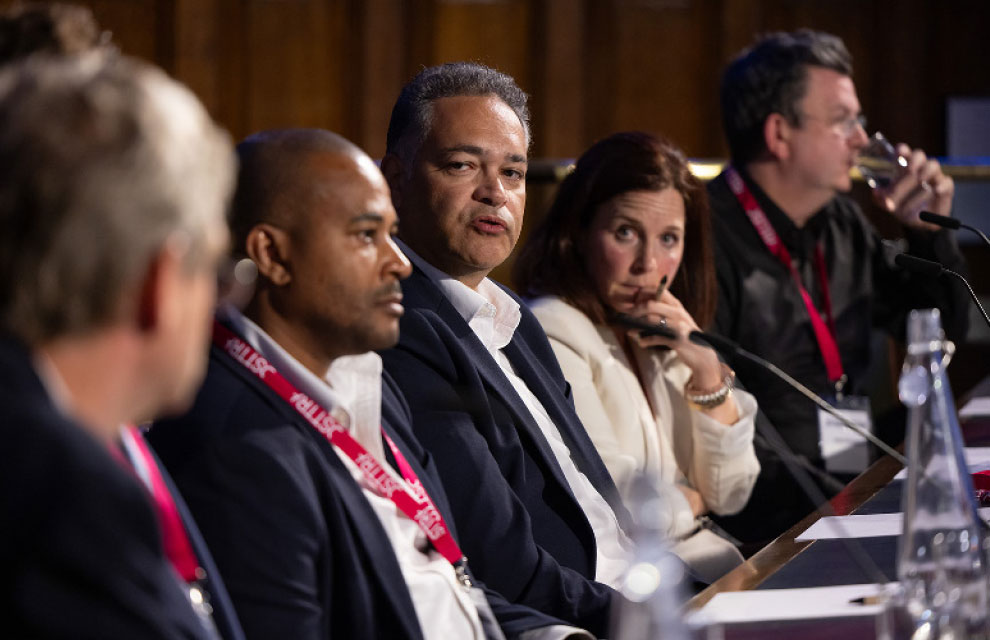 Image: Andrew Davis
T+1 readiness gaps persist as firms confront tighter recall and return timelines
Many firms remain unfamiliar with key requirements of T+1 despite years of discussion, said Roy Zimmerhansl, head of Capital Markets at WTS Hansuke, at the opening panel at this year’s Securities Finance Symposium in London.
Moderating the ‘T+1: Thirteen Months Out and Still Asking the Hard Questions’ panel, Zimmerhansl explained: “We still hear people say they didn’t know about certain impacts.” He added that even regulators have admitted in the past they cannot reach their entire regulated base, leaving many buy side firms reliant on service providers for information.
Zimmerhansl highlighted the compressed timeline ahead of the 11 October 2027 go?live. With 274 working days remaining, he said securities finance faces heightened pressure because its workflows sit inside cash market cut?off windows. “We have to comply with all of the changes — but in even less time.”
Turning to readiness, Tony Holland, director of Market Practice at ISLA, shared findings from the EU T+1 Industry Committee latest readiness survey, which suggested that 83 per cent of firms are actively preparing, though notable gaps remain. 41 per cent of firms involved in fund share dealings have not yet developed their implementation plan, and more than half of all firms have not received guidance from their IT or service providers, creating a potential third-party dependency and implementation risk.
Holland reminded participants that UK and EU recommendations have been available for over 16 months. In the UK, they are underpinned by “the code of conduct” supported by the Bank of England, the Financial Conduct Authority (FCA), and HM Treasury. In the EU, the mantra is “adhere or explain”. He noted that while 2025 was focused on assessment and planning, “2026 is about development, build execution, and delivery”.
The panel then examined sale notifications, recalls, and returns. Rickie Smith, head of EMEA agency securities finance product at J.P. Morgan, said compressed timelines make early client notifications critical. “Getting the recall out is one thing, but the return is just as critical,” he said. He warned that behavioural patterns and custody?chain constraints continue to create friction.
Smith said tighter T+1 windows increase the risk of settlement failures, buy?ins, penalty exposure, and entitlement breaks. He added that firms need documented operating agreements and service level agreements covering cut?off times, late?recall handling, partial returns, and exception ownership. “The quicker clients can get instructions to the agent lender, the higher the likelihood the recall can support underlying cash?market settlement.”
Turning to trading and liquidity, Olivier Zemb, head of equity finance and collateral management at Caceis, said firms should expect timing mismatches. “The first thing I see is the persistence of mismatches and the increased repercussions of those in the context of T+1. The misalignment of DVP and FOP cutoffs is not new but we may see a higher number of recalls settling between the two windows due to shorter settlement cycles.
“As a consequence, CSDR penalties could be higher. The question then is who is liable for these penalties. Some rewording of the GMSLA may be needed to clarify this.”
He also stated that he does not anticipate higher buffers or over-recalls but rather a reallocation of traded volume from less efficient participants to more reliable counterparts. “The likelihood of execution will probably become a more important parameter to assess best execution than it is today.”
Zemb said partial settlement and partial returns may improve efficiency, but only if lending chains and cash market settlement teams are aligned. He highlighted the need for clearer specifications and more standardised processes across the chain.
The panel then looked at operational accuracy. Matthew Neville, managing director and head of agency lending trading, EMEA, at State Street, explained that agent lenders must ensure inventory positions published from their lending systems are “as accurate as possible” so borrowers have certainty when they execute orders on T+0. Although most lending activity is conducted for T+1 today, we expect more same-day demand from borrowers since they will likely not see their net demand requirements from their clients until the following morning.
He highlighted that increased activity at the close will require all parties in the value-chain to expedite trade instructions to their providers to ensure borrows and recalls can be executed timely. He emphasised the use of vendor tools to automate post-trade workflows, including pre-matching, regular refreshing of required collateral values (RQVs), and automated loan-release post-collateralisation at the triparty agents, to minimise the manual touchpoints and expedite settlement given we will have less time to solve mismatches.
According to Neville, lenders are already co-ordinating with borrowers on a bilateral basis to ensure trading parameters, including prepays and electronic execution cut offs are suitable per borrower entity, as demand and collateral distribution capabilities may differ depending on location.
Gabi Mantle, global head of client success and solutions engineering at Equilend, highlighted lessons from the US and Canadian transitions. She reported a 183 per cent rise in recall volume and a 27 per cent increase in recall relationships since January 2025 – already seven months after the US/CAD move to T+1 which had already seen significant uptake. “You don’t have time for manual processing.”
Mantle described efforts to improve efficiency higher up the chain, including a complete revamp of standard settlement instruction (SSI) repositories. Logins and data extraction have risen by 1,000 per cent, with SSIs “finally getting a seat at the table”. She added that pre?matching is too late under T+1, and firms need short selling regulation SSIs and place of settlement data embedded at the point of execution.
A panellist noted that future market models, including same?day repo funding, tokenised collateral, and delivery?versus?delivery concepts, will shape the longer?term move toward T+0.
In closing, panellists urged firms to coordinate across the full lifecycle and strengthen communication with clients, service providers, and counterparties. “You can’t just prepare for yourself — you need to bring your client base with you,” one panellist said. They encouraged firms to review processes, align trading and settlement teams, and verify counterparties’ plans ahead of the accelerated settlement cycle.
Agility of liquidity and centralisation are key for repo market
The ‘Repo in the Spotlight: Liquidity, Margin, and the Race for Smarter Infrastructure’ panel revealed what is top of mind for participants in the repo market, and how a focus on agility of liquidity and centralisation will play an important role as the market moves towards digital assets.
Having moderated a repo-focused panel at the symposium three years prior, industry expert Gabriele Frediani asked the session’s speakers how the landscape has changed in the last few years.
For Charlie Badran, head of AXA Financing at BNPP Asset Management, the repo market has been “cheapening”, especially on the euro-denominated side.
“We have seen repo levels tightening between core/semi-core, and peripheral countries, including sovereign, supranational, and agency bonds (SSAs) like European Union debt. We see less bonds trading specials, especially in the German market. There is quantitative tiering which implies less demand for collateral, and less trading of specials,” Badran explained.
Other aspects of change in the repo market revolve around client expectations. At MarketAxess, clients on the buy and sell side come to the firm for trade matching and confirmation to ensure accurate books and records. But these client conversations are turning to focus on the value add of additional connectivity.
Neelan Pavan, product manager, MarketAxess Match & Repo, said: “When we're looking at regulation around T+1 settlement and especially mandatory clearing in the US for Treasury repo, there's going to be more connectivity points required in clearing and settling transactions.
“Firms are looking to us to access that connectivity point for the wider market and become that key infrastructure.”
While the market is seeing growth in all aspects of repo, it is still a demanding environment, noted Georgia Whilock, product manager, CollateralOne at BNY, who drives the conversation towards optimisation.
She highlighted that optimisation for the buy side is changing because the relationships between the buy side and their liquidity providers are changing and expanding as they diversify.
“As the complexity of that market is evolving, we’re seeing more demand for access to and for changes to technology, such that it becomes a holistic operating system,” she added. “Clients want to be able to traverse between bilateral and triparty, cleared and uncleared, self-directed and agent financing, as their portfolios and their networks change.”
Travelling all the way from New York for the event, Tony Tutrone, director, repo product manager at Broadridge, brought intraday repo to the forefront of conversation, naming it the biggest advancement the market has seen in the last few years.
“We're seeing heavy focus in terms of reducing costs. It's hard enough to generate revenue, so preserving it should be a primary focus as well,” he noted. “The benefits of reducing daylight overdraft — Liquidity Coverage Ratio and supplementary leverage ratio — are being addressed in intraday trading.”
Tutrone believes intraday repo is an elegant solution in terms of its ability to mobilise otherwise trapped collateral and put it to use. He added: “The atomic settlement of it allows for immediate unwind after the trade is completed, and it's significant in that the velocity in which the unwind occurs allows you to continue to reuse that collateral.”
Discussing how the role of the fixed income prime broker could change in terms of centralisation of connectivity, Pavan said through conversations with buy side clients, the firm has been working to provide one source of truth of a transaction for firms.
He explains: “With our prime broker connectivity, we're allowing our clients to permission their prime brokers to view that transaction from MarketAxess. Ultimately, you've got the buy side, the executing broker, and now the fixed income prime broker on the same version of that transaction.”
The panel went on to discuss the importance of high-quality data at the point of execution in regards to intraday repo. Where firms have “standardised messaging at that level”, settlement and triparty systems have been able to innovate and scale quickly from that point onwards, noted Whilock.
In turn, she believes this messaging can drive other innovations on the buy side, such as digital assets and AI transformations — which she said all stems from good data and the visibility of that data.
Pavan followed this line of thought, suggesting that “it all starts with data” and that automation depends on clean, standardised information.
“Counterparties should be able to describe a lifecycle event of a trade in the same way as each other. That is what SFTR was aiming to standardise but we still see discrepancies between the buy and sell side,” he explored. “Data is the key for any automation; the standards that are out, such as the Common Domain Model, matters for the next wave of automation.”
Bringing the panel to a close, the panellists discussed collateral optimisation. It is a theme which has been ongoing for some time, especially in respect of the ability to screen for eligibility, the ability to implement institutions, and continuous allocations.
The panellists suggested that while improvements are needed, collateral optimisation has been achieved. Tutrone named it an “open-ended subject” and suggested that the market may not ever “get to the finish line”.
Whilock added: “Optimisation is enabling the flexibility that the buy side are demanding. So the ability to optimise over all repo types, all security lending types, margin types, and bringing in as many of the different cash deployment trade types into that optimisation as possible. That, again, all comes down to having interoperability across the board.”
Looking ahead over the next 12 months to two years, it seems the agility of liquidity and centralisation is going to be key for the market.
Linking closely with this, Whilock suggested new digital asset markets are going to require financing, being able to “tie those in” with traditional rails is going to be even more important.
Further, she explained that buy side firms and asset owners will have funds that have traditional assets, infrastructure assets, as well as crypto and “all kinds of” digital tokens.
“Being able to finance them all in a central place using interoperable infrastructure and a single ecosystem is going to be something that has real importance as we move into the next 12 months to 2 years,” she remarked.
Beneficial owners in 2026
The beneficial owner of 2026 is asking more of securities lending than incremental revenue.
From liquidity and collateral optimisation to tailored analytics, emerging-market access, and increasingly complex approaches to indemnification, beneficial owners are taking a far more active role in determining how their lending programmes operate.
Speaking during ‘The beneficial owner in 2026: smarter, more demanding, and harder to retain’ panel, industry participants agreed that this shift is changing both the construction of lending programmes and the relationship between beneficial owners and their providers.
For Cassie von Sprecher, managing director and global head of agency lending sales at Deutsche Bank, one of the most significant changes has been the growing sophistication with which owners view different financing opportunities. “It’s much more about bucketing the assets that are long in the portfolio so that we can maximise return,” she explained.
Becky Turner, relationship manager for securities finance at BNY, added that clients are interrogating programme data in increasingly sophisticated ways, particularly as more organisations combine direct and agent lending. “They want to be able to see a holistic view of total risk, total exposure, etc,” she informed.
Similarly, Ann Marie Dilworth, buy side trading services relationship manager at J.P. Morgan, sees a widening spectrum of approaches among beneficial owners. “We’re seeing a lot more complexity and active participation from some of those more complex and, dare I say, sophisticated lenders who really want to be engaged on the strategy of their programme,” she observed.
That greater engagement extends to one of securities lending's longstanding risk questions — indemnification.
Simon Heath, chief strategy officer at Equilend, argued that indemnification should no longer be viewed as a static decision. “Indemnification is not necessarily the only game in town,” he stated. “It’s not disappearing, and nobody expects it to.”
Discussing Basel 3.1 and balance sheet constraints, Turner argued that beneficial owners increasingly need to understand the structures available to make their programmes more capital efficient. “Programme design is going to become a competitive lever here,” Turner said.
“Basel 3 and Basel Endgame doesn't necessarily mean fewer opportunities,” she continued. “It does mean that lending programmes need to be more flexible, more deliberate, and more strategically designed if beneficial owners want to compete for increasingly scarce borrower balance sheets.”
Europe's transition to T+1 settlement in October 2027 represents another test of how prepared beneficial owners are to scrutinise their existing operating models.
For Dilworth, the issue is not simply making current processes move faster. Early sales notification will be critical as settlement timelines compress, while straight-through processing needs to extend across the beneficial owner's end-to-end workflow.
“The key thing here… is it’s really the exceptions where the risk is,” she points out, particularly where manual intervention remains necessary. “The market doesn’t care what your contractual guidelines are,” Dilworth warned. “There may be costs associated with those fails.”
Her central message was: “It’s not about doing the manual processes more quickly or faster. It’s trying to remove those manual steps.”
Remy Ferraretto, head of securities finance and repo sales at CACEIS, argued volatility is not necessarily negative for securities lending. In many cases, it actually creates additional demand, higher utilisation and attractive revenue opportunities. “The first point is not to stop securities lending, but to accompany your clients in order to capture these benefits,” he said.
“The changes in those periods are the intensity and the speed of risk management. We increase the monitoring of counterparty exposures, collateral quality, concentration, and liquidity. Also on the collateral management we apply a conservative eligibility framework, with appropriate haircuts depending on the asset type and risk profile.
“You need the ability to reassess exposures intraday and, where necessary, issue additional margin calls and I think this is where the discussion becomes particularly interesting for the future and tokenisation could become an important part of that evolution. The client is not looking for just a single agent, but a partner, and a partner who knows how to interpret the data.”
The balance between opportunity and operational complexity is especially visible in emerging lending markets. Saudi Arabia, Taiwan, and South Korea were highlighted as markets capable of generating strong lending returns, but where beneficial owners also have to understand operational and recall risks.
For von Sprecher, the potential value makes those challenges worth addressing. “The opportunity cost is too great to not be in these markets if you hold Saudi, Taiwan, South Korean assets,” she said.
Heath said Saudi Arabia presents a somewhat different challenge from more established lending markets, with securities lending infrastructure and knowledge still developing. “The appetite to lend and the want to be active in the market is perhaps going ahead of where the market education and understanding is,” he observed.
As programmes become more tailored, the way beneficial owners assess performance is changing with them.
Traditional benchmarking frequently relied on comparisons with peer institutions. But Dilworth argued that those comparisons can be misleading when portfolios, risk tolerances, and programme guidelines differ. “Clients want to measure basically the performance of their portfolio against their own portfolio,” she highlighted.
The more useful questions are therefore becoming what opportunity exists within a beneficial owner's assets, how much has been captured, and what restrictions are preventing the remainder from being realised.
Greater access to technology and data inevitably raises another question: if beneficial owners are becoming more sophisticated, why not simply run securities lending themselves?
The panel's answer was that technology has lowered barriers to entry, but executing a trade is only one component of operating a lending programme.
Turner pointed to market access, borrower relationships, documentation, collateral management, recalls, settlement, tax, and counterparty oversight as areas where agents continue to provide infrastructure that can be difficult to recreate internally.
“I think beneficial owners underestimate that running a direct model is not just putting in place a trading platform,” she suggests. “Technology is changing how securities lending is delivered, but it doesn't eliminate the value of scale, expertise, market access, and risk management.”
As a result, the industry's future may be less a choice between agency and direct lending than a combination of the two.
Heath described the hybrid model as a “natural evolution”. “I think agents provide operational heft that is way above and beyond what a beneficial owner can affordably do.”
Ultimately, that may be the defining feature of the beneficial owner in 2026.
Greater sophistication does not necessarily mean removing intermediaries. Instead, beneficial owners are becoming more selective about what they want to control themselves, what they expect their agents to provide, and how closely securities lending should be integrated into the broader management of their portfolios.
As Turner put it during the audience discussion, securities lending is increasingly moving beyond an operational function and becoming “a proper liquidity management tool, treasury function, cash optimisation”.
For agent lenders, retaining those clients will therefore increasingly depend on whether they can evolve from service providers into partners capable of supporting a much broader set of objectives.
Tokenised securities and the new collateral frontier
The Symposium’s fourth panel of the day centred on the impact of tokenisation on the securities finance market. With the technology enabling the real-time mobility of assets — irrespective of custodian time zone — and a new suite of intraday liquidity services, the securities industry is met with a host of exciting possibilities and looming regulatory and market hurdles.
Tokenised assets, particularly tokenised bonds, currently dominate the tokenisation landscape, according to the panel’s moderator — Steven Czarnota, head of digital at Tonic — which is “natural” given the high-volume, “backbone” nature of the instrument. To adopt the technology at scale, Czarnota believes that changing the settlement rails first, before looking to adopt the more “nascent” assets afterwards, “makes sense”, and the current approach to tokenisation is on the right path.
But what “locked” assets would benefit from tokenisation, exactly? Which securities could be turned into financing collateral, and what is the main thing holding them back right now?
There are a few key reasons why these nascent assets are “locked up”, in the view of Mike Lambert, securities lending product director at Broadridge. ETFs, for example, can be difficult to move as settlement can end up in the wrong place. Location is another important factor; time zones continuously pose problems for collateral managers on opposite sides of the world. Tokenisation, he says, can “solve a lot of those problems”. And, while there is still work to be done, freeing these instruments would make them reusable.
Another important facet to ensure the successful implementation of tokenisation is optimisation. For instance, a portfolio position does not need to be redeemed when tokenising a money market fund (MMF), which circumvents cash drag, according to Jennifer Keser, head of market structure and regulation for EMEA and APAC at Tradeweb. Avoiding what is a notable concern in TradFi infrastructure is demonstrable proof of its potential advantages.
Sabine Farhat, head of securities financing, lending, and repo product management at Murex, highlighted the fact that tokenisation opens up access to pools of liquidity that would have instead been sitting idly. The technology, she says, allows collateral managers to gain better risk assessment and valuation insights by letting them see the asset onchain.
Furthermore, Sam Edwards, managing director, Alpha Collateral Services at State Street, explained that the growing acceptance of tokenised MMFs as collateral signals a shift towards a more efficient digital collateral ecosystem where assets can move more seamlessly between market participants. As friction is reduced and accessibility improves, new investors and counterparties are drawn into the market, expanding liquidity and increasing utility.
Edwards added that the key question is how these benefits can be extended to a broader range of collateral assets and short-duration instruments. By improving collateral mobility and reducing operational friction, tokenisation helps create a “liquidity flywheel”: broader distribution creates utility, utility attracts participants, and increased participation deepens liquidity. This, in turn, makes the market more valuable and efficient for all participants, bringing more investors to the proverbial table.
The technology raises an interesting question: if collateral settles in minutes, how, then, does collateral optimisation evolve for tokenised assets, and how is more frequent optimisation balanced with factors like net settlement?
Fast settlement is “the most material change to the collateral framework”, in the eyes of Wassel Dammak, strategic account director for capital markets, Europe and the UK at Vermeg. In today’s markets, optimisation cycles are predictable. Obligations and inventory are collected, eligibility and concentration rules are applied, and funding and opportunity costs are considered. With the advent of tokenisation, the processing cycle has moved to realtime, which, according to Dammak, puts “more pressure on the decision-making”, as allocation and optimisation need to be as fast as settlement. Dammak emphasised the importance of striking a balance between the bases of the whole collateral process, and warned that phases running at different speeds will result in more buffers being held.
Looking further ahead, Edwards argued that a truly onchain environment could deliver the industry a “golden source of truth” for assets and liabilities. Greater transparency would give firms a real-time view of available inventory alongside their funding and collateral obligations, making it easier to determine how best to deploy, mobilise, and source assets. This enhanced visibility has the potential to improve collateral sourcing, liquidity management, and overall market efficiency.
But all of this becomes difficult to attain if regulators are unclear in their frameworks, and authoritative certainty is not consolidated across jurisdictions.
Czarnota emphasised the importance of regulatory readiness in unlocking the scale necessary to reap tokenisation’s rewards, reflected in the surge in activity over the last 12 months. For example, the US Securities and Exchange Commission (SEC) clarified rules around crypto assets; the European Central Bank (ECB) accepted distributed ledger technology (DLT)-issued securities; and the Bank of England (BoE) and the UK Financial Conduct Authority (FCA) published feedback on wholesale tokenisation.
However, he noted that there was more work to be done in terms of unlocking scale in securities finance.
Keser echoed this view. She believes that regulatory certainty is the obvious next step in ensuring the market continues to scale and take full advantage of tokenisation. The speed at which jurisdictions are moving — particularly the US — is, on one hand, very encouraging, she said. On the other hand, each regulatory authority appears to be moving in a different direction, and subsequently heading towards a more fragmented global market.
Another potential pitfall permeating the prospect of tokenisation is the premise of hybrid regulatory environments, where digital and traditional assets are subject to different legislation. This can be “very messy”, Lambert argued. The obvious way to get past this hurdle, he said, is to have one set of regulations to cover everything, which he believes is “unlikely to happen”.
Instead, the potential ramifications could have regulators scratching their heads, trying to work out what exactly an asset is, where in the hybrid environment it belongs, where it needs to be to get reported, and whether it needs to be reported to the Securities Financing Transactions Regulation (SFTR), or somewhere else because it is digital.
What, then, does the securities market need to avoid fragmentation?
The panel agreed that this is no small order. “Fragmentation is the biggest practical hurdle to overcome,” Dammak responded. Trying to fix each instance of DLT individually would result in “a less efficient overall system” and siloed collateral — the exact problems already plaguing TradFi venues.
If the market wants to avoid repeating today’s fragmented structure, Farhat argued that trusted IDs and orchestration layers are key enablers of interoperability at scale.
Without standardised asset identifiers across onchain environments and TradFi systems, she warned that firms run the risk of operating in silos, resulting in operational bottlenecks and potential double-dipping. Orchestration layers, Farhat explained, act as a bridge across disparate platforms, establishing a common set of books and records, and ensuring fluid, end-to-end collateral management and real-time data flow.
Edwards made the point that interoperability requires more than just connecting blockchains. Key enablers include a multi-chain wallet architecture, enterprisewide visibility of assets and liabilities, and operational workflows that can support both TradFi assets and tokenised representations.
He emphasised the importance of selecting both the correct account and wallet structure for an institution’s operating model, all while maintaining a holistic view of inventory, obligations, and liquidity across the enterprise.
The industry’s need for interoperability, not isolated networks, was further highlighted by Keser. Tokenised securities must connect across platforms with existing market infrastructure, supported by common standards. Crucially, she said, the ecosystem needs an interoperable digital cash leg to enable true delivery-versus-payment. For Keser, the goal is clear: move from electronic to digital, not create a parallel market. Unfortunately, according to Lambert, institutions are not taking advantage of the tools that would allow for interoperability.
The Common Domain Model (CDM) — a digital blueprint for how financial products are traded and managed across their entire lifecycle — is not being utilised enough. He added that there is a “certain competitive advantage in not being interoperable”, particularly for triparty agents and other types of vendors. However, he believes that if the market forces enterprises to become interoperable, then they would do so.
If the securities industry is serious about moving forward, the panel concluded that common standards, such as the CDM, trusted IDs, and orchestration layers, would be crucial if the market is to adopt tokenisation at scale. But until that happens, institutions run the risk of repeating the fragmented, siloed architecture they already rely on.
AI adoption in securities finance hinges on data foundations and human accountability
The panel, moderated by Martin Walker, senior product manager at FIS, provided an insight into the practical uses, governance requirements, and adoption challenges for AI in financial market processes.
Andy Pardoe, professor of AI, started off the discussion by explaining the greater picture looking back on the evolution of AI. “The technologies and techniques we have today are very different to what AI was considered in the 90s or the 70s.”
He suggested that there are two main categories of AI. Symbolic AI — “the old?school expert systems and rule engines” — and the more modern connectionist approaches, “which are neural networks, deep learning and LLM?type tools”. They have strengths in different areas, he said.
Pardoe explained that model selection should reflect task complexity. “You can often solve something with a simple AI method, and that’s usually the best option. Mapping the complexity of the problem to the complexity of the solution — you don't need to use the biggest LLM for every problem.”
Walker then asked how AI relates to securities lending. Richard Colvill, project manager at Reg-X, said AI is often seen as “a solution to a problem we don’t yet know we have”, but its operational value is clear. “Traders seldom see all the components that get a transaction to market.
“Most firms focus on the headline P&L, but there are many operational costs underneath — multiple custodians, platform fees, SWIFT costs, and post?trade regulatory reporting charges.” He said AI could “help define and analyse” those costs.
Ernst Dolce, CEO and co-founder of Banqora, highlighted that client demand is focused on lifecycle management, collateral management and optimisation, visibility, and data capture. “Clients want to bring actionable insights from their data, including from intelligence from their middle and back-office operations.
“In securities finance, booking the trade was never the challenge — most of the information is already there: accessing all the info from your email, your chats, internal, and service provider systems is the hard part. AI is very good at capturing information that is stored everywhere and exploiting it.”
He said firms want to understand the true cost of their transactions. “If you have three counterparties with the same credit risk and credit limit, all giving you the same fee rate, they are not equivalent in terms of P&L once you factor in settlement-fail penalties, funding costs, balance sheet and capital treatment, and operational overhead. You can use the power of AI to see that.”
Pierre Khemdoudi, CEO and co-founder of Gentek AI, expressed that mapping remains one of the biggest barriers to adoption. “The main challenge remains having systems connected to each other.
“Putting everything into a single data lake costs a lot of money and requires huge resources. Smaller organisations cannot do that.”
He said firms need a connective layer before automation. “Whatever you do afterwards — transaction reporting, collateral management, decision?making — you need to do that first.”
Khemdoudi also highlighted the need for model orchestration. “Some models are very expensive, some are very cheap. Some are good at text, some at pictures, some at numbers. You need a layer that not only connects systems but orchestrates which model you use to be efficient in terms of cost and capability.”
In terms of risks, Pardoe stated that most firms’ data is “an absolute mess”, and AI agents require guardrails. “AI can map the data today, but it can also look at how the data evolves and remap based on what it sees.
“We need the infrastructure underneath that guides, governs, and controls the agents. We’ve already seen cases where agents go out of their sandbox.”
Dolce said mistakes are inevitable but scale changes the risk. “Human beings make mistakes. What changes with AI is the scale. There is a risk, but the way you deploy it matters. You will always have human interaction with AI.”
Colvill stated that oversight does not require large teams. “You don’t need very many people sitting on top of a bot. Fair?allocation algorithms are an area that needs to be looked at with AI. I can’t honestly say they are fair for many smaller beneficial owners. AI could offer much?needed transparency.”
The panel agreed that AI is not a “magic” solution. It requires data foundations, governance, critical thinking and domain expertise. Adoption is expected to grow, but firms must choose the right models, apply them to the right problems, and understand the workflows they are trying to improve.
NO FEE, NO RISK
100% ON RETURNS If you invest in only one securities finance news source this year, make sure it is your free subscription to Securities Finance Times
100% ON RETURNS If you invest in only one securities finance news source this year, make sure it is your free subscription to Securities Finance Times