In 2011, a team of technology experts set out to challenge the limitations they saw in traditional brokerage systems and build something fundamentally different. According to Ashraf Bajsair, head of regional sales for the Middle East at EXANTE, financial markets at the time were highly fragmented and access to them was often siloed across multiple providers, systems, and infrastructures.
“The founders recognised that technology — rather than legacy banking processes — was the key to unlocking direct, streamlined access to global markets,” he explains. “They set out to build a unified platform that combined security, flexibility, and real-time access to numerous markets and asset classes from a single account.”
From these beginnings in Malta and Cyprus, EXANTE evolved from a tech-driven startup into a fully licensed global fintech brokerage with regulatory authorisations in these jurisdictions, as well as in the UK and Hong Kong. But the firm’s growing footprint did not end here.
Entering the Middle East became a key next chapter for EXANTE’s global expansion. In late 2024, the firm established a presence in the Dubai International Financial Centre (DIFC), obtaining a regulatory licence from the Dubai Financial Services Authority (DFSA) and opening a local office. Here, the firm is able to service clients in the United Arab Emirates (UAE) directly, offering access to more than 50 global financial markets and over a million financial instruments through its proprietary platform.
“For EXANTE, entering the Middle East wasn’t just about geography — it was strategic,” notes Bajsair.
Referring to the UAE, and Dubai in particular, as a leading international financial hub with deep capital markets and a growing base of sophisticated investors, Bajsair says establishing a local foothold enables EXANTE to bring its innovative technology, multi-asset access, and bespoke service model closer to clients in the region. The move reinforces its long-term vision of borderless market connectivity and client-centric solutions.
Since opening the Dubai office, EXANTE has seen “very strong” interest from the region, which has reinforced the firm’s decision to establish a local presence. From Bajsair’s perspective, the move has highlighted the importance of proximity. Being physically present in the DIFC and operating under DFSA regulation strengthens trust, enhances responsiveness, and allows EXANTE to better understand and serve regional clients, he explains.
“The level of engagement from professional and institutional investors has been significant,” says Bajsair. “The UAE is home to a highly sophisticated investment community with a strong appetite for global diversification and direct market access, which aligns closely with EXANTE’s multi-asset, multi-market offering.”
EXANTE has also redefined how it positions its offering locally, with an emphasis on flexibility, bespoke solutions, and cross-border access — all within a robust regulatory framework.
“The Middle East is a strategic growth market for us, and we see long-term opportunity in deepening our presence here.”
Tech trends shaping the way forward
The Gulf Cooperation Council (GCC) is rapidly emerging as one of the world’s most strategically important investment regions. Bajsair believes this evolution is being shaped by a new wave of technology, and at the heart of this transformation are cloud infrastructure, AI, and digital assets.
In a recent research report from EXANTE — entitled ‘From the Abraham Accords to AI to FTAs: How to Trade the New Middle East’ — Dr Renée Friedman, global head of research, highlights how capital flows into next-generation digital infrastructure, such as high-capacity cloud and data centre projects, are positioning the UAE and Saudi Arabia as global AI power hubs, effectively leap-frogging legacy systems elsewhere.
“This cloud-native build-out underpins broader adoption of AI across sectors, driving efficiency, enhancing analytics, and accelerating decision-making in financial services and beyond. Again, that’s not just theoretical — it’s observable in major investments into data capacity and AI infrastructure across the region,” Bajsair highlights.
In terms of tokenisation, Bajsair is seeing regional interest align with global trends where digital tokens are explored as a way to unlock liquidity, modernise settlement processes, and expand access to alternative assets. He indicates that while adoption is still in early phases, the convergence of cloud, AI, and digital asset technologies is redefining how markets operate and how capital is allocated across the Gulf.
“Together, these trends are helping to rewrite the investment landscape in the Middle East — not only in traditional sectors like energy and real-estate infrastructure but increasingly in technology-led services and financial markets innovation.”
The December report highlights that the Middle East is no longer simply a capital exporter, it is rapidly becoming a global capital attractor. One of the key takeaways is the scale of structural transformation underway. Bajsair explains that the region is actively diversifying beyond hydrocarbons, with significant investment flowing into advanced manufacturing, digital infrastructure, logistics, and financial services. He suggests that this is being driven by coordinated policy frameworks and long-term national strategies rather than short-term market cycles.
Looking ahead to 2026 and beyond, Bajsair anticipates continued momentum in three broad areas. First, cross-border capital flows and strategic partnerships; second, the institutionalisation of private markets and alternative assets; and third, deeper integration of technology across core industries.
“Overall, the region’s trajectory is one of consolidation: moving from rapid build-out to sustained, globally competitive growth.”
Committing to innovation
Over the next 12 months, EXANTE’s focus will centre on two core priorities: supporting diversification in an increasingly complex geopolitical environment, and continuing to innovate its technology.
“We’re operating in a world where geopolitical shifts, regional realignments, and evolving trade dynamics are reshaping capital flows,” says Bajsair. “In that context, diversification is no longer optional — it’s essential.”
The firm’s priority is to continue empowering investors with seamless access to global markets, ensuring they can allocate capital across geographies, sectors, and asset classes efficiently, regardless of where they are based.
At the same time, innovation remains fundamental to EXANTE’s DNA. The prime broker is actively exploring how AI can further enhance its proprietary trading platform — from improving onboarding and execution efficiency to delivering smarter, more intuitive tools for professional investors.
In his conclusion, Bajsair states: “From a regional perspective, we are also committed to deepening our presence in the UAE. Strengthening our regulatory footprint is part of that long-term vision subject, of course, to regulatory approvals. As we say here, inshallah.
“Overall, the direction is clear: broaden global access, elevate technology, and reinforce our commitment to the Middle East as a strategic growth market.”


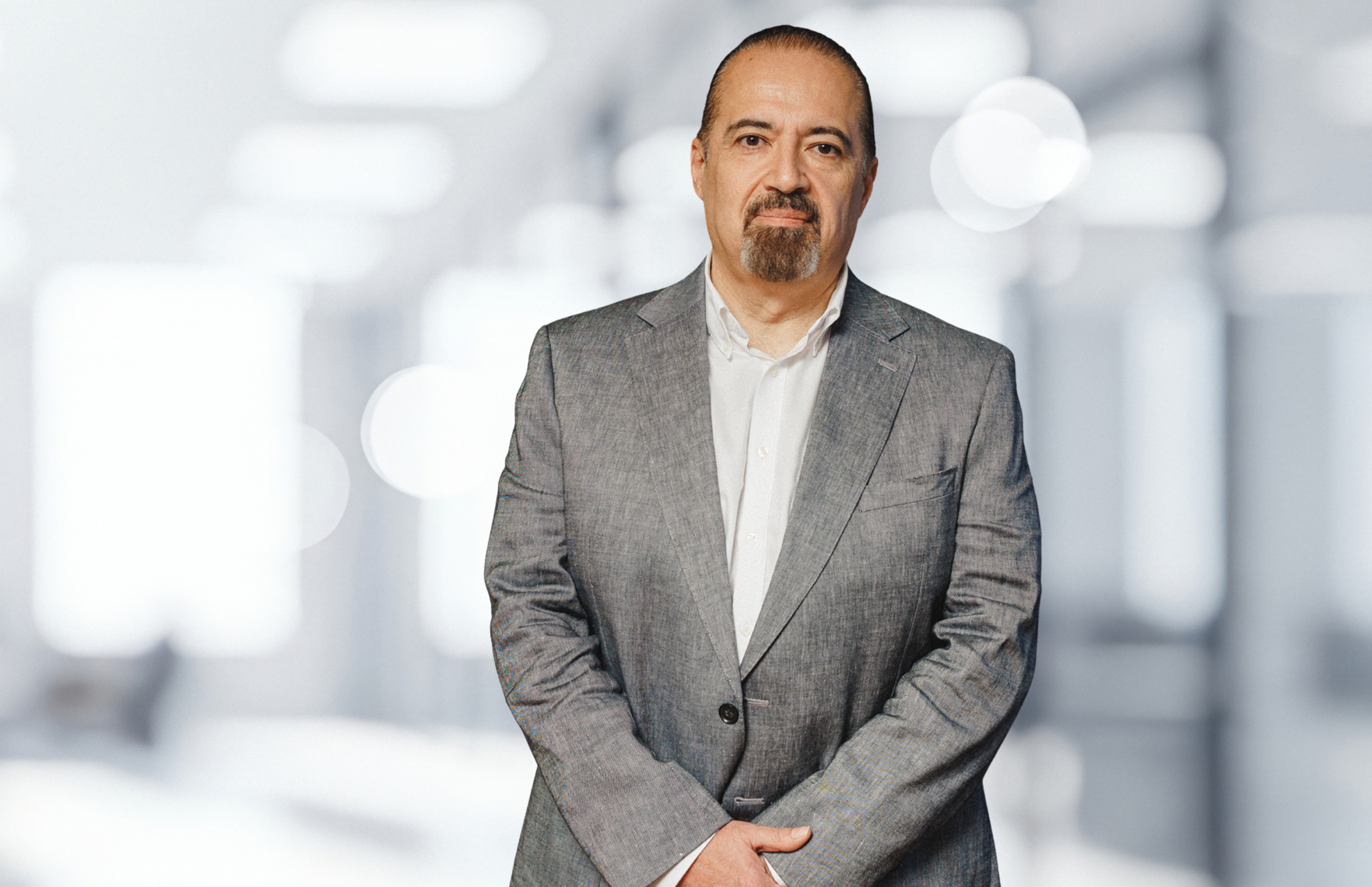 Image: Ashraf Bajsair