As clearing continues to evolve across venues, firms can benefit from a more integrated approach to optimising collateral and liquidity across increasingly connected markets. Rather than managing each venue in isolation, a cross-venue view can help firms see where assets are available, where obligations are concentrated, and how collateral can be allocated more efficiently. The result can be greater transparency, less trapped liquidity, more effective use of balance sheet, and a stronger ability to respond as market conditions and clearing requirements change.
What are the big value drivers for your clients these days?
BJ Marcoullier: The value drivers are the same as they have been for hundreds of years: maximise the bottom line, preserve capital, reduce risk, and be as operationally efficient and resilient as possible. However, within a particular business, the low-hanging fruit to move the needle on these points has largely been picked. The next gear for our clients to improve these metrics is achieved by maximising franchise efficiency. This means organised decision-making and execution across a centralised collection of obligations or clearing venues.
The lens we at Transcend look at this problem statement through is collateral. To give some context to what is on the table, for larger firms that are tackling this, we are seeing savings in the tens and in some cases in the hundreds of millions of dollars. This is driven by achieving better funding returns on cash, retaining more high-quality collateral, reducing liquidity usage, reducing margin call amount, lowering risk-weighted assets (RWAs), and automating collateral orchestration, among other factors across numerous venues and processes.
How is Transcend approaching margin and collateral with respect to Treasury clearing?
Todd Hodgin: Clearly, Treasury clearing is a big change in the market structure. Firms are very focused on compliance — just setting up the clearing models that make sense for the brokers and their customers. However, firms know that these changes are anticipated to require significantly more margin and collateral to support the treasury and repo market. This is a new cost for the market, and firms are looking strategically at which clearing models are the most profitable from a margin standpoint but also how to optimise within those models. We are implementing solutions for clients where collateral optimisation can play a real role and mitigate some of these costs.
What are the challenges to optimising collateral and liquidity across FICC, OCC, and other market venues — particularly when requirements, settlement cycles, and liquidity conditions differ?
Hodgin: Optimising across this ecosystem has a lot of challenges. Every venue grew in its own silo to support the specific needs of that market. And within that channel, infrastructure was created to support that market, including frequency of margining, types of margin, intraday margin calculations, eligibility criteria for collateral postings, and getting risk or margin offsets for particular collateral. The Fixed Income Clearing Corporation (FICC) and the Options Clearing Corporation (OCC) both have unique paradigms such as margin offsets, portfolio-specific haircuts, and intraday margining that structure the market.
You also have to overlay that these are only two outlets for firms’ assets. They must also evaluate their broader funding needs across triparty and bilateral funding requirements while also monetising hard-to-borrow securities or specials. The interplay between optimising specific margin and collateral treatment at the FICC and OCC while also optimising the broader funding needs, becomes really important.
What practical steps can market participants take today to prepare for more integrated collateral ecosystems?
Marcoullier: It may sound simple, but a practical acknowledgment that collateral needs to be viewed as a standalone resource independent from its source trades is a critical first step. Nothing dictates that a corporate bond owned by a fixed income desk cannot be used to collateralise a funding shell or meet a margin call traded by the equities desk. But often the incentive structures are not in place for this higher order of optimisation to matter to people.
And to make it more complicated, these ecosystems include not only the traditional rails such as initial margin/variation margin, securities borrowing and lending, repo, triparty, and cleared margin, but very soon it is also going to include tokenised assets. So even though the complexity is quite high, the opportunity is enormous. But to achieve it, the first step is for firms to buy in and organise around this principle of collateral as its own asset class requiring its own set of tools.
From an OCC perspective, what does effective optimisation look like?
Hodgin: The OCC is quite unique in that it provides some useful features that allow firms to optimise their margin and collateral postings. Smartly pledging collateral to get the best liquidity value, portfolio haircut, while reducing overall beta at the CCP can provide real benefits to margin and collateral needs. Effective optimisation also means having visibility into real-time margin updates at the OCC so a firm can optimise across the day in the life, after market recalls and substitutions to ensure the best collateral usage. We have seen clients really focus on ensuring their optimisation process and benefits support the daily lifecycle.
How does the OCC compare to other clearing venues?
Hodgin: The OCC plays an integral role for securities lending and the options market. Its margin methodology has quite a few useful features, whether it be specific or escrow deposits, portfolio deposit/withdrawal haircuts, and margin impact from the collateral pledged. We help clients use these features to more efficiently meet their margin obligations.
Marcoullier: Obviously each clearing venue has its own risk and operating models. From our seat, OCC has been doing a lot of work to continue updating its risk modeling and making it easier to access its data so that its members can be as efficient as possible when managing their margin on an end-of-day and now even intraday perspective. But as each venue has its own protocols, risk models, technology, etc., it makes centrally managing this process very cumbersome operationally.
Without technology to aggregate and provide a single portal to manage that activity centrally, unfortunately in many cases it becomes common to leave excess buffers, run unnecessary cross-currency haircuts, and utilise high-value collateral when cheaper collateral may be available. Transcend’s CCP Central product tackles this problem by joining 45+ CCPs into a single platform for globally centralised optimisation and automation of collateral notifications and movements.
What is driving the biggest change in how firms invest in technology in this space?
Hodgin: I think without a doubt the biggest sea change has been distributed ledger technology (DLT) and tokenisation. While the crypto space has grown over the last few years, the last year has seen great momentum in adopting DLT into traditional funding and collateral use cases. However, by nature, it is going to be more complex before it gets simpler. Firms will now have their traditional processes using traditional rails, while now having optionality on digital rails onchain.
Integrating many of the new paradigms including different chains, smart contracts, wallets, and other infrastructure will all need to be supported to reap the benefit. The momentum has grown, and now optimising cross-venue means optimising across traditional and digital venues, and there are some real use cases coming online. We have been helping firms not only adapt but also lead in this space.
What will distinguish firms that successfully adopt cross-venue optimisation from those that continue to manage collateral and liquidity in separate silos?
Marcoullier: Organisational structure. By far the firms that are earning the highest ROI are the ones that have dedicated front office heads of collateral management. The ability to coordinate across markets and various business lines is key. With this they also need the ability to make sure the firm’s policies and incentives are getting transmitted effectively, so that business partners across the firm tangibly feel the positive results or are dissuaded from inefficient trading activity.
Hodgin: From a technical standpoint, I would say that this is also about scale. Everyone can hire a strong quant resource to outline hypothetical moves that should be made, but in reality, it has to be done at scale. Straight-through processing is required to ensure thousands of collateral movements are done at each venue and that they stick — so that you actually get the value. Therefore, a firm needs sophisticated tools to integrate and harmonise across these venues. The end-to-end value chain and processes are equally important to the quantitative aspect.
The conversation points to a broader operating-model shift: effective collateral management is no longer only a question of finding the right optimisation strategy, but of embedding that strategy into daily decisions across the firm. Dedicated ownership, aligned incentives, timely data, and straight-through execution are what turn theoretical savings into realised results. As clearing becomes more intraday, interconnected, and digitally enabled, firms that build this discipline into their operating model will be better positioned to manage complexity and capture value as market conditions evolve.


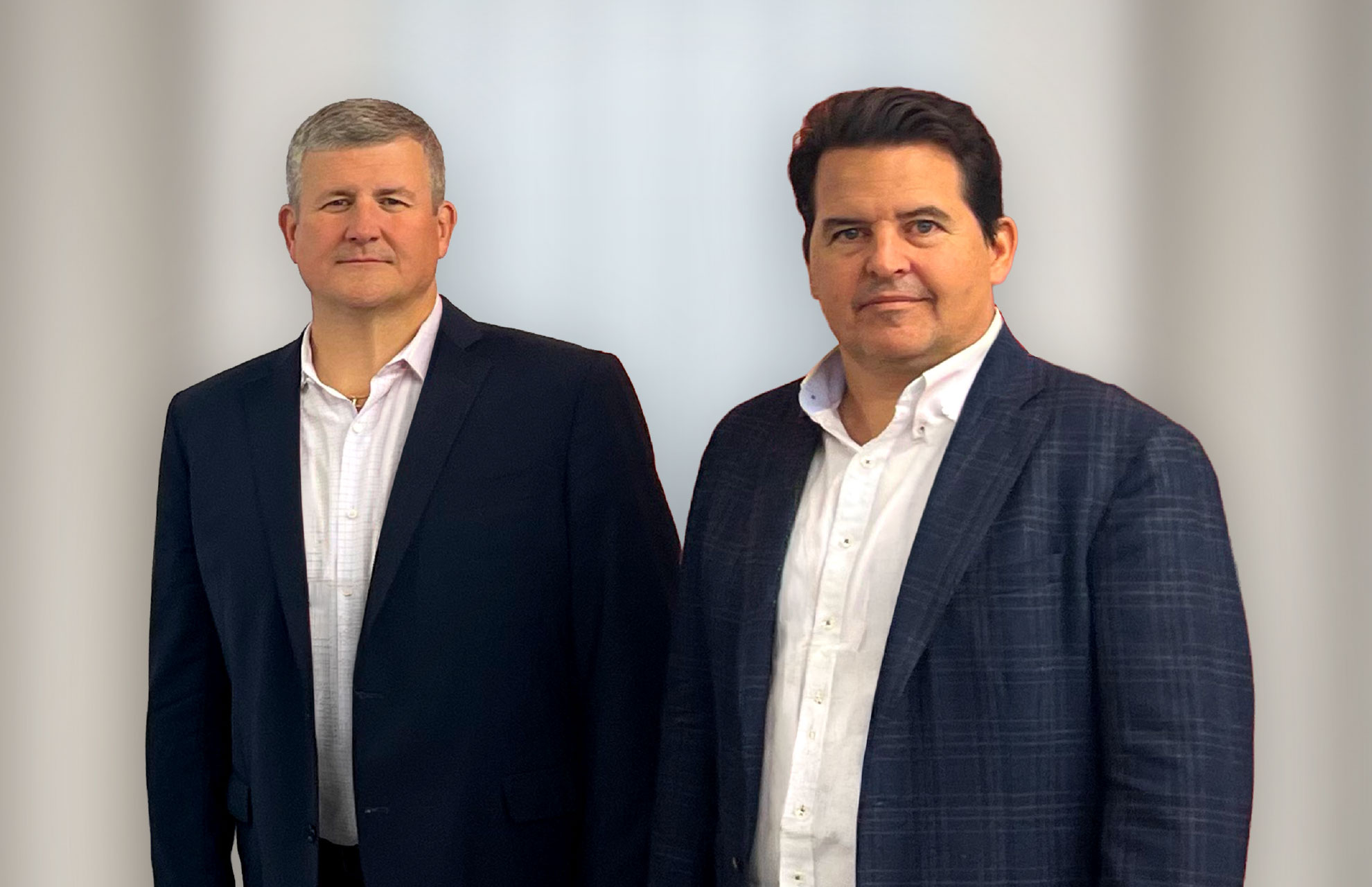 Image: Transcend