A Cape Town recap
14 April 2026
Following in-depth discussions within Africa’s southernmost country, Carmella Haswell provides an overview of the key highlights from SASLA’s annual conference
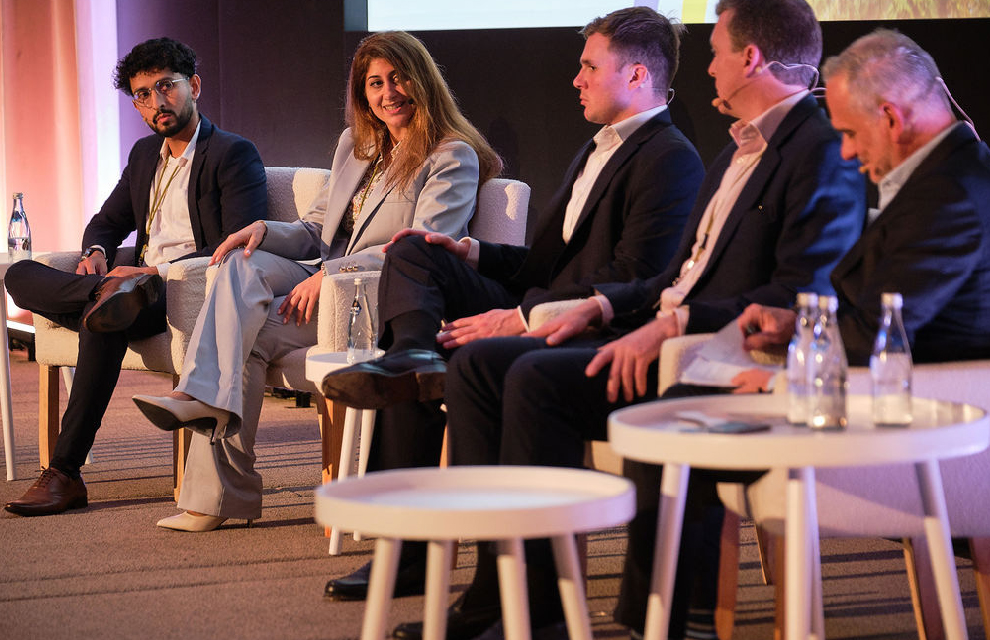 Image: SASLA
The South Africa Securities Lending Association (SASLA) celebrated the end of summer in Cape Town with its annual one-day conference. Hosting discussions from regulation and stablecoins to collateral and T+1, the event provided a reminder to current and future participants of South Africa’s position in the securities finance market, and where it is heading.
Led by SASLA chair Hitesh Harduth, the association aims to ensure that the South African securities lending industry remains at the forefront of innovation and development, setting a standard for others to follow.
ISLA advocates for South Africa
Opening this year’s South Africa Securities Lending and Collateral Management conference, Ina Budh-Raja, CEO of the International Securities Lending Association (ISLA), reviewed the global market and developments within South Africa.
Predicting tremendous change and challenges ahead, Budh-Raja said she is keen to foster more collaboration on a global scale and highlights the importance of having a professional, credible voice in the industry.
While 2026 came at the back of a bumpy year, it followed a record-breaking year in 2025 which presented a 27 per cent year-on-year increase to US$14.9 billion for securities lending. However, she noted a deepened requirement around growth, with policymakers “desperately looking” for growth opportunities on a jurisdictional and regional basis.
Focusing on South Africa, Budh-Raja noted that it is a market which is capital sufficient but liquidity poor. The region presents much opportunity since its exit from the Financial Action Task Force (FATF) — otherwise known as the ‘grey list’ — and moving to the green list for netting. A move she believes is extremely meaningful for the global market.
“The foundations are there and the doors are open for business,” she noted. “How do we drive that liquidity, working with organisations like SASLA, to bring that international market access to this market? That will be done through building credibility and trust in the market through well recognised frameworks.”
This further development of the market is also being replicated in Nigeria and Kenya. ISLA has participated in discussions in both countries in regards to the evolution of netting.
In addition, the association is engaging with SASLA to share its experience, lessons learned, as well as existing issues that the market is facing in Europe. “You have a market here that is very well placed to jump into the driving seat and not have to go through the same hurdles, learn those lessons from us and make progress ahead,” she explained.
Netting in South Africa and Kenya is an ongoing advocacy process for ISLA. Budh-Raja believes this is not only a key lever for the industry, but a game changer for this market.
“We certainly see precedence in the Middle East. Saudi Arabia was a market that, 10–15 years ago, we thought netting would never be possible, but we got there through years of coordinated advocacy and working with the regulators,” she highlighted.
In terms of ISLA priorities for 2026, the association will work to challenge fragmentation, produce standards, advocate for simplification and harmonisation, drive market initiatives for liquidity, and when it comes to digital, ISLA will focus on what this transformation means for the industry and work on the underlying standards to drive harmonisation.
On the European front, there is currently heightened advocacy with competitiveness being a key focus. Significant packages have been released by the EU Commission around market integration and supervision. It has provided ISLA with an opportunity to advocate for this industry when it comes to T+1, capital solutions, solutions around clearing.
In terms of its advocacy work, a key item for ISLA is working on pledge collateral for UCITS to create a level playing field.
“Some of the agenda in Europe is relevant in Africa. Looking at this region, where South Africa is a clear front runner, there is an opportunity to break down some of the barriers when it comes to regional distinctions, to drive a common market approach to market structure,” Budh-Raja added.
Concluding her keynote speech, Budh-Raja highlighted the importance of working together to challenge fragmentation in the markets. She insisted that the underlying standards need to be harmonised and recognisable by regulators and the industry.
She added that by using common platforms, like the Common Domain Model, there is an opportunity to move to a digital future with an underlying common language.
Exploring South Africa’s first institutional rand stablecoin
Introducing South Africa’s first institutional-grade rand stablecoin, representatives of Sanlam Specialised Asset Management, EasyEquities, and Luno explored ZARU.
Over the last year, Vighnesh Patel, independent member of Luno’s Digital Asset Listing Committee, and responsible for overseeing stablecoins at Luno, has seen a dramatic development in the stablecoin market, which he believes has decoupled from the digital asset market entirely. There is an increasing growth, notably in the institutional space, he highlighted.
According to Patel, recent reports suggest the market capital of stablecoins is sitting at approximately US$320 billion, with 232 million holders of stablecoins. In 2025, around US$30 trillion worth of transactions were processed in 2025.
“The power of an institutional stablecoin comes from a group of reputable institutions that can bring credibility, infrastructure, governance, adoption, as well as liquidity. If you are working in isolation, you are limited by your own balance sheet,” he explained.
Providing more context to what a stablecoin is, Earle Loxton, CEO of EasyCrypto, a product of EasyEquities, said that the biggest distinction between a stablecoin and an asset like Ethereum or Bitcoin is “the fact that its value is stable”. It is stable because it is “pegged” to the rand and backed by rand-denominated high-quality liquid assets (HQLA).
The project to create ZARU came together with the intention to put an institutional-grade stablecoin on the market through the collaboration between four “highly reputable” institutions (Sanlam, EasyEquities, Luno, and Lesaka Technologies), which is typically how stablecoins propagate, noted Loxton, through digital exchanges and financial platforms.
Jacques le Roux, CEO of Sanlam Financial Markets and representing Sanlam Specialised Asset Management, said his firm is primarily responsible for managing the assets that back the stablecoin and, in particular, to manage those assets in a way that allows the issuer to meet its obligation.
Moving the conversation forward, Patel noted that regulation in this area is well established globally. Whether it is in Hong Kong or Dubai, regulations such as the CLARITY Act and MiCA are baseline requirements that apply to stablecoins globally.
“While at the moment, in the context of South Africa, there is an absence of very specific mandates on potential requirements or liquidity, ZARU has been designed as an institutional stablecoin, so it’s designed to fit into those global frameworks,” Patel highlighted. “A stablecoin by its nature, and institutions, are operating globally, and as such, your money needs to be compliant globally.”
Currently, ZARU is only available to institutional clients on a direct mint basis — in other words, an institution looking to access this stablecoin would need to deposit or transfer the ZAR by electronic funds transfer (EFT) into the bank account of the issuer (a licensed crypto-asset service provider), and then the ZARU will be sent to the buyer as an institution as the issuer does not engage directly with retail clients.
ZARU is accessible via OTC on Luno and is also available on the South African online investment platform, EasyEquities. According to Patel, there are multiple other global partners seeking to create distribution for this asset, both on exchanges and OTC, which will unfold over the coming months.
Le Roux added: “The starting point was to design something that would be of such a high standard that an institution would be comfortable engaging with it.
“We take governance, compliance, and regulatory requirements — both current and future — into account to continue to build out something that we believe, one day, will be the foundation of digital value transmission in the South African industry.”
Expanding the conversation, le Roux sees a global trend where, increasingly, a wider scope of assets are being digitised. He noted that in order to engage with assets that are digital, participants need digital ‘money’ to transfer value. Therefore, ZARU is acting as the “foundation layer” of that digital economy, so to speak, he added.
With the conversation coming to a close, le Roux provided a perspective which he noted “may seem a little futuristic, but it’s really not”.
In the context of securities lending and collateralisation, he sees a world where collateral contracts can be translated perfectly and, effectively, automated in digital form.
As an example, if the collateral contract notes “if you give me X number of securities, I will give you Y number of other securities, and applying the following haircuts” it is possible when assets are tokenised and the currency is tokenised, for all of that to happen instantaneously and in a rules-based fashion, without human error or intervention, and 24/7.
“Collateralisation can happen all of the time. Margining, topping up, returning collateral, can happen on an automated basis, without timing differences between jurisdictions,” said le Roux.
He warned that the sooner large institutions realise the world is shifting in that direction, the better, because otherwise they will be left behind in a world where they do not have the infrastructure or knowledge to participate.
In conclusion, le Roux said: “The South African financial market, in the context of broad emerging markets, is very well advanced. And I also think that is the case on the digital asset side. I don’t believe we are terribly behind the curve, globally speaking.
“We’re perhaps slightly behind in terms of regulatory clarity and adoption, but in our defence, it is because the world has suddenly moved very quickly in the last two years. The sophistication is there in terms of certain market participants. My worry is that, on the institutional side, we run the risk of falling behind.”
The potential journey to T+1
Panellists sat down to discuss everything regulation, legal, and tax — with a debate on T+1 leading the charge forward.
The Johannesburg Stock Exchange released a paper for comment in December 2025 to gather insights from market participants on a shorter settlement cycle, in particular, whether South Africa should transition from T+3 to T+2 or to move straight to T+1, or not at all.
Providing his commentary on the matter, Brett Kotze, head of Post?Trade Services at A2X Markets, noted his involvement in South Africa’s transition from T+5 to T+3, which took seven years to achieve.
He thought it best for the market to move straight to T+1 — in line with other markets such as the US, and soon to be the UK and Europe — because it is a “very costly project” to change systems and provide testing across a number of institutions.
Kotze noted that in the US, the fail rates in a T+1 environment are sitting in the region of eight per cent of market volumes on a daily basis.
With predictions for a possible eight to nine per cent fail rate on a daily basis in this shorter settlement cycle environment, Kotze said this provides a barrier for the South African market. In South Africa, the market prides itself on a 99.99 per cent settlement rate.
“My big issue at the moment, and a discussion I’ve had with the various regulators, is that we’ve got such a large workbook for the next five or six years, where does T+1 come as a priority,” he continued.
Gary Haylett, general manager of Strategic Projects, Prudential Division at The Banking Association South Africa, stated that there are a number of positives to moving to T+1, but it will also come with a number of challenges. Key focuses will centre on standardisation and automation.
From the perspective of August Sander, head of securities lending at Sanlam Financial Markets, South Africa is liquidity poor. While the region needs to move to a short settlement cycle with the belief that it will increase liquidity, Sander says that at the same time, more liquidity is required from the lending side to be able to facilitate the move.
Similarly, Sander notes the difficulty of recurring fail rates. He highlighted the importance of ensuring that the liquidity is available to ensure a fail rate of up to eight per cent, but from a fail rate of “almost nothing”, this means losing the claim of no fail trades in South Africa.
“It’s not just the liquidity that’s not deep, but the breadth of the market is not that big, and that is probably to a large degree due to the economy that’s not growing,” he explained. “We need the economy to grow, to increase listed securities and listed shares, to make it worthwhile to trade here.”
Touching on eligible collateral, Haylett mentioned ongoing discussions of expanding collateral to include equities, project bonds, NCDs, and even corporate debt.
Haylett is excited to see how this pans out and hopes for a “Redbull injection” into capital markets as a result, something the market has not had for “a very long time”.
Led by SASLA chair Hitesh Harduth, the association aims to ensure that the South African securities lending industry remains at the forefront of innovation and development, setting a standard for others to follow.
ISLA advocates for South Africa
Opening this year’s South Africa Securities Lending and Collateral Management conference, Ina Budh-Raja, CEO of the International Securities Lending Association (ISLA), reviewed the global market and developments within South Africa.
Predicting tremendous change and challenges ahead, Budh-Raja said she is keen to foster more collaboration on a global scale and highlights the importance of having a professional, credible voice in the industry.
While 2026 came at the back of a bumpy year, it followed a record-breaking year in 2025 which presented a 27 per cent year-on-year increase to US$14.9 billion for securities lending. However, she noted a deepened requirement around growth, with policymakers “desperately looking” for growth opportunities on a jurisdictional and regional basis.
Focusing on South Africa, Budh-Raja noted that it is a market which is capital sufficient but liquidity poor. The region presents much opportunity since its exit from the Financial Action Task Force (FATF) — otherwise known as the ‘grey list’ — and moving to the green list for netting. A move she believes is extremely meaningful for the global market.
“The foundations are there and the doors are open for business,” she noted. “How do we drive that liquidity, working with organisations like SASLA, to bring that international market access to this market? That will be done through building credibility and trust in the market through well recognised frameworks.”
This further development of the market is also being replicated in Nigeria and Kenya. ISLA has participated in discussions in both countries in regards to the evolution of netting.
In addition, the association is engaging with SASLA to share its experience, lessons learned, as well as existing issues that the market is facing in Europe. “You have a market here that is very well placed to jump into the driving seat and not have to go through the same hurdles, learn those lessons from us and make progress ahead,” she explained.
Netting in South Africa and Kenya is an ongoing advocacy process for ISLA. Budh-Raja believes this is not only a key lever for the industry, but a game changer for this market.
“We certainly see precedence in the Middle East. Saudi Arabia was a market that, 10–15 years ago, we thought netting would never be possible, but we got there through years of coordinated advocacy and working with the regulators,” she highlighted.
In terms of ISLA priorities for 2026, the association will work to challenge fragmentation, produce standards, advocate for simplification and harmonisation, drive market initiatives for liquidity, and when it comes to digital, ISLA will focus on what this transformation means for the industry and work on the underlying standards to drive harmonisation.
On the European front, there is currently heightened advocacy with competitiveness being a key focus. Significant packages have been released by the EU Commission around market integration and supervision. It has provided ISLA with an opportunity to advocate for this industry when it comes to T+1, capital solutions, solutions around clearing.
In terms of its advocacy work, a key item for ISLA is working on pledge collateral for UCITS to create a level playing field.
“Some of the agenda in Europe is relevant in Africa. Looking at this region, where South Africa is a clear front runner, there is an opportunity to break down some of the barriers when it comes to regional distinctions, to drive a common market approach to market structure,” Budh-Raja added.
Concluding her keynote speech, Budh-Raja highlighted the importance of working together to challenge fragmentation in the markets. She insisted that the underlying standards need to be harmonised and recognisable by regulators and the industry.
She added that by using common platforms, like the Common Domain Model, there is an opportunity to move to a digital future with an underlying common language.
Exploring South Africa’s first institutional rand stablecoin
Introducing South Africa’s first institutional-grade rand stablecoin, representatives of Sanlam Specialised Asset Management, EasyEquities, and Luno explored ZARU.
Over the last year, Vighnesh Patel, independent member of Luno’s Digital Asset Listing Committee, and responsible for overseeing stablecoins at Luno, has seen a dramatic development in the stablecoin market, which he believes has decoupled from the digital asset market entirely. There is an increasing growth, notably in the institutional space, he highlighted.
According to Patel, recent reports suggest the market capital of stablecoins is sitting at approximately US$320 billion, with 232 million holders of stablecoins. In 2025, around US$30 trillion worth of transactions were processed in 2025.
“The power of an institutional stablecoin comes from a group of reputable institutions that can bring credibility, infrastructure, governance, adoption, as well as liquidity. If you are working in isolation, you are limited by your own balance sheet,” he explained.
Providing more context to what a stablecoin is, Earle Loxton, CEO of EasyCrypto, a product of EasyEquities, said that the biggest distinction between a stablecoin and an asset like Ethereum or Bitcoin is “the fact that its value is stable”. It is stable because it is “pegged” to the rand and backed by rand-denominated high-quality liquid assets (HQLA).
The project to create ZARU came together with the intention to put an institutional-grade stablecoin on the market through the collaboration between four “highly reputable” institutions (Sanlam, EasyEquities, Luno, and Lesaka Technologies), which is typically how stablecoins propagate, noted Loxton, through digital exchanges and financial platforms.
Jacques le Roux, CEO of Sanlam Financial Markets and representing Sanlam Specialised Asset Management, said his firm is primarily responsible for managing the assets that back the stablecoin and, in particular, to manage those assets in a way that allows the issuer to meet its obligation.
Moving the conversation forward, Patel noted that regulation in this area is well established globally. Whether it is in Hong Kong or Dubai, regulations such as the CLARITY Act and MiCA are baseline requirements that apply to stablecoins globally.
“While at the moment, in the context of South Africa, there is an absence of very specific mandates on potential requirements or liquidity, ZARU has been designed as an institutional stablecoin, so it’s designed to fit into those global frameworks,” Patel highlighted. “A stablecoin by its nature, and institutions, are operating globally, and as such, your money needs to be compliant globally.”
Currently, ZARU is only available to institutional clients on a direct mint basis — in other words, an institution looking to access this stablecoin would need to deposit or transfer the ZAR by electronic funds transfer (EFT) into the bank account of the issuer (a licensed crypto-asset service provider), and then the ZARU will be sent to the buyer as an institution as the issuer does not engage directly with retail clients.
ZARU is accessible via OTC on Luno and is also available on the South African online investment platform, EasyEquities. According to Patel, there are multiple other global partners seeking to create distribution for this asset, both on exchanges and OTC, which will unfold over the coming months.
Le Roux added: “The starting point was to design something that would be of such a high standard that an institution would be comfortable engaging with it.
“We take governance, compliance, and regulatory requirements — both current and future — into account to continue to build out something that we believe, one day, will be the foundation of digital value transmission in the South African industry.”
Expanding the conversation, le Roux sees a global trend where, increasingly, a wider scope of assets are being digitised. He noted that in order to engage with assets that are digital, participants need digital ‘money’ to transfer value. Therefore, ZARU is acting as the “foundation layer” of that digital economy, so to speak, he added.
With the conversation coming to a close, le Roux provided a perspective which he noted “may seem a little futuristic, but it’s really not”.
In the context of securities lending and collateralisation, he sees a world where collateral contracts can be translated perfectly and, effectively, automated in digital form.
As an example, if the collateral contract notes “if you give me X number of securities, I will give you Y number of other securities, and applying the following haircuts” it is possible when assets are tokenised and the currency is tokenised, for all of that to happen instantaneously and in a rules-based fashion, without human error or intervention, and 24/7.
“Collateralisation can happen all of the time. Margining, topping up, returning collateral, can happen on an automated basis, without timing differences between jurisdictions,” said le Roux.
He warned that the sooner large institutions realise the world is shifting in that direction, the better, because otherwise they will be left behind in a world where they do not have the infrastructure or knowledge to participate.
In conclusion, le Roux said: “The South African financial market, in the context of broad emerging markets, is very well advanced. And I also think that is the case on the digital asset side. I don’t believe we are terribly behind the curve, globally speaking.
“We’re perhaps slightly behind in terms of regulatory clarity and adoption, but in our defence, it is because the world has suddenly moved very quickly in the last two years. The sophistication is there in terms of certain market participants. My worry is that, on the institutional side, we run the risk of falling behind.”
The potential journey to T+1
Panellists sat down to discuss everything regulation, legal, and tax — with a debate on T+1 leading the charge forward.
The Johannesburg Stock Exchange released a paper for comment in December 2025 to gather insights from market participants on a shorter settlement cycle, in particular, whether South Africa should transition from T+3 to T+2 or to move straight to T+1, or not at all.
Providing his commentary on the matter, Brett Kotze, head of Post?Trade Services at A2X Markets, noted his involvement in South Africa’s transition from T+5 to T+3, which took seven years to achieve.
He thought it best for the market to move straight to T+1 — in line with other markets such as the US, and soon to be the UK and Europe — because it is a “very costly project” to change systems and provide testing across a number of institutions.
Kotze noted that in the US, the fail rates in a T+1 environment are sitting in the region of eight per cent of market volumes on a daily basis.
With predictions for a possible eight to nine per cent fail rate on a daily basis in this shorter settlement cycle environment, Kotze said this provides a barrier for the South African market. In South Africa, the market prides itself on a 99.99 per cent settlement rate.
“My big issue at the moment, and a discussion I’ve had with the various regulators, is that we’ve got such a large workbook for the next five or six years, where does T+1 come as a priority,” he continued.
Gary Haylett, general manager of Strategic Projects, Prudential Division at The Banking Association South Africa, stated that there are a number of positives to moving to T+1, but it will also come with a number of challenges. Key focuses will centre on standardisation and automation.
From the perspective of August Sander, head of securities lending at Sanlam Financial Markets, South Africa is liquidity poor. While the region needs to move to a short settlement cycle with the belief that it will increase liquidity, Sander says that at the same time, more liquidity is required from the lending side to be able to facilitate the move.
Similarly, Sander notes the difficulty of recurring fail rates. He highlighted the importance of ensuring that the liquidity is available to ensure a fail rate of up to eight per cent, but from a fail rate of “almost nothing”, this means losing the claim of no fail trades in South Africa.
“It’s not just the liquidity that’s not deep, but the breadth of the market is not that big, and that is probably to a large degree due to the economy that’s not growing,” he explained. “We need the economy to grow, to increase listed securities and listed shares, to make it worthwhile to trade here.”
Touching on eligible collateral, Haylett mentioned ongoing discussions of expanding collateral to include equities, project bonds, NCDs, and even corporate debt.
Haylett is excited to see how this pans out and hopes for a “Redbull injection” into capital markets as a result, something the market has not had for “a very long time”.
NO FEE, NO RISK
100% ON RETURNS If you invest in only one securities finance news source this year, make sure it is your free subscription to Securities Finance Times
100% ON RETURNS If you invest in only one securities finance news source this year, make sure it is your free subscription to Securities Finance Times